
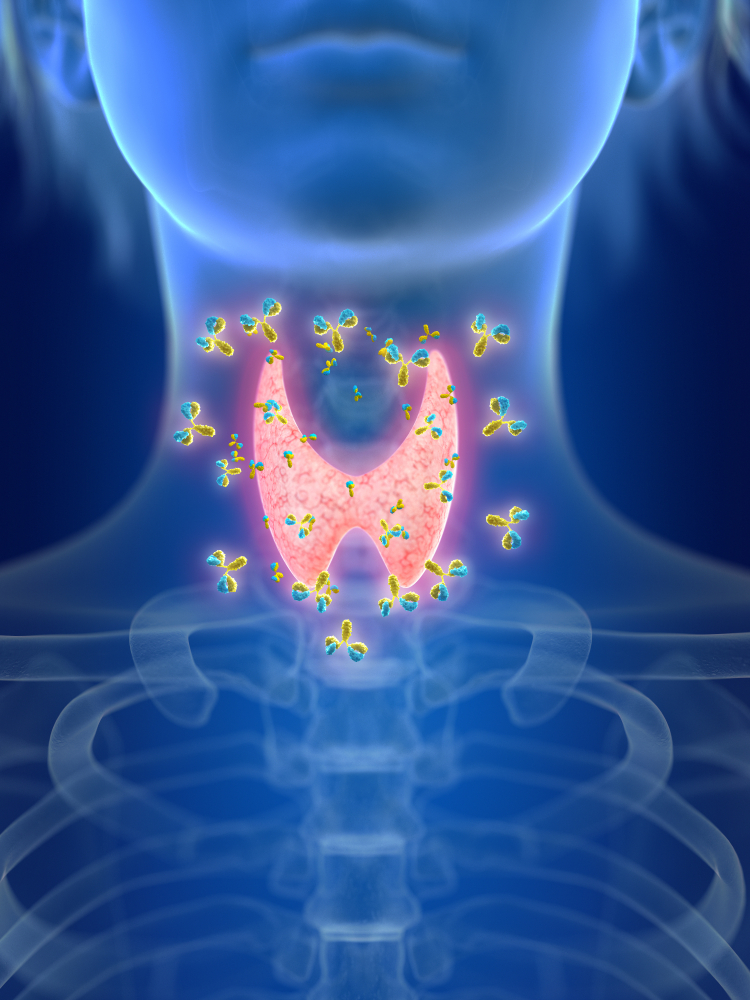
Graves disease is an immune system disorder resulting in the overproduction of thyroid hormones. Another word for this is hyperthyroidism. There are several disorders of the thyroid that may result in hyperthyroidism, and Graves disease is one of the more common ones. Usually, a malfunction in the immune system is the primary culprit for the onset of this disease. In a healthy immune system, antibodies are produced to target viruses, bacteria or other foreign matters. With Graves disease the body produces an antibody to a part of the cells in the thyroid gland which tends to mimic the pituitary gland and it overrides your hormone regulation causing the overproduction of thyroid hormone, thereby causing hyperthyroidism.
 Graves Disease symptoms can be wide ranging and may significantly impair your life, primarily because the thyroid hormones affect so many aspects of the body. Generally, it’s more common among women and before the age of 40.
Common signs and symptoms of Graves disease include:
- Anxiety and irritability
- Weight loss
- Difficulty sleeping
- Light tremors of your hands or fingers
- Increase in perspiration or warm, moist skin
- Enlargement of your thyroid gland
- Rapid or irregular heartbeat (palpitations)
- Change in menstrual cycles
- Erectile dysfunction or reduced libido
- Frequent bowel movements
- Bulging eyes (Graves’ ophthalmopathy)
- Thick, red skin usually on the shins or tops of the feet (Graves’ dermopathy)
A small percentage of people will experience the condition known as GRAVES’ OPHTHALMOPATHY, where the tissue and muscles around your eyes become inflamed from a buildup of certain carbohydrates behind the eyes, along with other immune system reactions, resulting in bulging eyes (exophthalmos), gritty feeling in the eyes, swollen or puffy eyelids, red eyes, sensitivity to light, double vision and even vision loss. Another indication of Graves’ Disease is Graves’ dermopathy which is a reddening and thickening of the skin, usually on your shins or on the tops of your feet.
Risk factors for the possible development of Graves’ disease include:
- Age–Usually before the age of 40
- Gender–Women more often than men
- Smoking— (Due to the toxicity affecting the immune system)
- Stress–Both physical and emotional for those who are genetically predisposed to Graves’
- Other immune disorders—Such as type 1 diabetes and rheumatoid arthritis
Complications of Graves’s disease can include brittle bones, heart disorders, pregnancy problems and thyrotoxic crisis. If you find yourself with a number of these symptoms, we can be of assistance.There are certain medications that are commonly prescribed for this condition, however here are Renewed Vitality we work to get to the root cause of why your thyroid is overactive and treat that.